Are You Ready for a Data Analyst Interview?
Assess your current readiness and identify the technical, analytical, and business skills employers expect from Data Analyst candidates.
I can write SQL joins confidently
I understand KPIs and business metrics
I can explain a dashboard I built
I can answer statistics questions
I have two or three portfolio projects
I can explain the business impact of my work
Skills Employers Evaluate
Data Analyst interviews are not just about answering questions. Employers evaluate your technical skills, business understanding, and ability to communicate insights.
Ultimate Data Analyst Interview Question Library
Explore the key interview areas employers use to evaluate Data Analyst candidates.
Python Interview Questions
Can you solve real data analysis problems using Python?
- Data Types
- Loops & Functions
- Data Structures
SQL & Database Interview Questions
Can you write efficient queries and explain database logic?
- Joins
- Aggregations
- Window Functions
Data Cleaning Interview Questions
Can you prepare messy datasets for accurate analysis?
- Missing Values
- Duplicates
- Outliers
EDA Interview Questions
Can you explore data and uncover meaningful business insights?
- Data Exploration
- Patterns & Trends
- Feature Analysis
Data Visualization Interview Questions
Can you present insights using effective charts and dashboards?
- Chart Selection
- Dashboards
- Power BI / Tableau
Statistics Interview Questions
Can you use statistical reasoning to explain business data?
- Hypothesis Testing
- Distributions
- Correlation
Business Metrics & KPI Interview Questions
Can you connect analysis to business outcomes?
- Revenue Metrics
- Customer KPIs
- Conversion Rate
Data Storytelling Interview Questions
Can you explain insights to non-technical stakeholders?
- Executive Summary
- Business Impact
- Recommendations
Business Case Study Questions
Can you solve real business problems using data?
- Revenue Drop
- Customer Churn
- Profit Decline
Take-Home Assignment & Portfolio Questions
Can you complete practical projects and present your work?
- Clean Datasets
- Build Dashboards
- Explain Findings
Real-World Data Analyst Interview Scenarios
Employers often evaluate how you approach business problems, not just technical concepts. Test your analytical thinking with these real-world scenarios.
I would analyze the conversion funnel to identify where users are dropping off. I would review landing pages, traffic sources, device types, recent website changes, page load times, and user behavior data to determine the root cause of the decline.
I would examine revenue, cost of goods sold, discounts, return rates, product mix, and operating expenses. This would help determine whether higher costs, excessive discounting, or changes in product sales impacted profitability.
I would analyze customer demographics, purchase history, engagement metrics, support tickets, and customer feedback. Segmenting churned customers and comparing them to retained customers can help identify patterns and potential causes.
I would validate the KPI definition, review data sources, compare calculation logic, check filters and date ranges, and reconcile the numbers with the original source data to identify discrepancies.
I would assess the impact of the missing data, communicate the limitation to stakeholders, provide preliminary insights based on available data, and clearly document assumptions while working to recover or validate the missing information.
I would analyze market size, customer demographics, competitor presence, demand trends, pricing, economic indicators, and potential risks to evaluate whether the market aligns with business goals and growth opportunities.
Top Data Analyst Projects Employers Love
Interview questions assess your knowledge, but projects demonstrate your ability to solve real business problems. These are the types of projects that help candidates stand out during interviews.
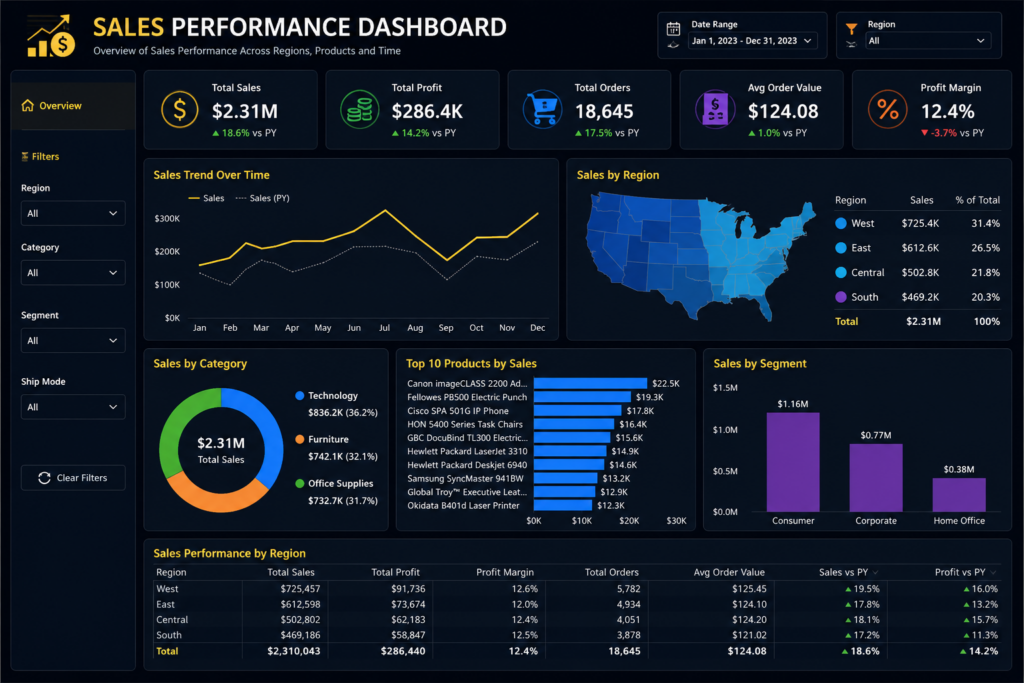
Sales Dashboard Analysis
Power BI • Business Analytics
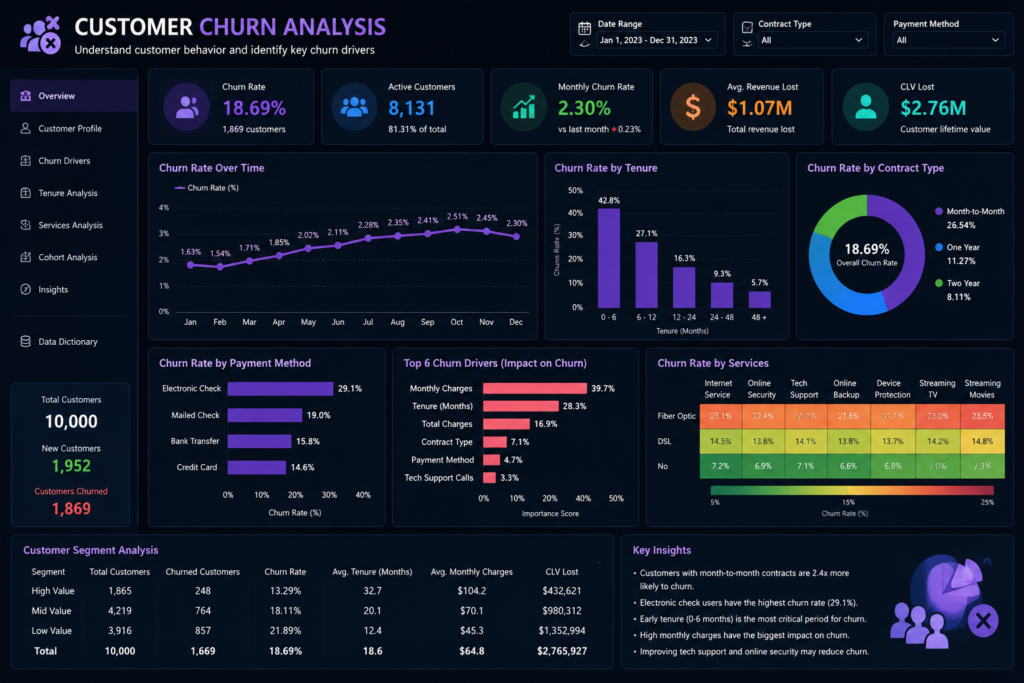
Customer Churn Analysis
Python • Machine Learning
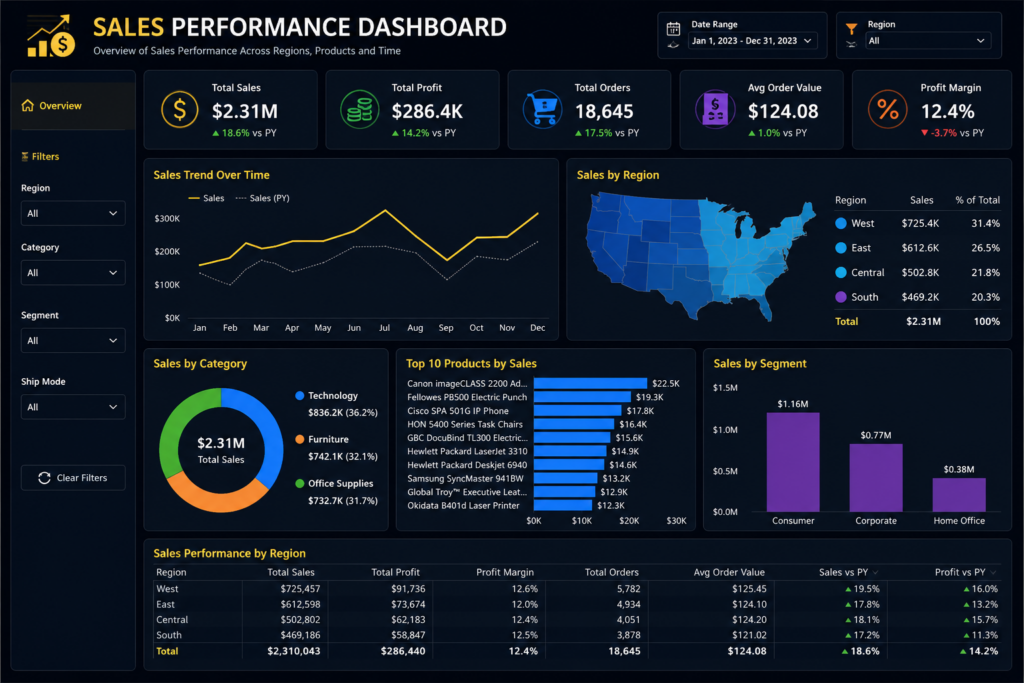
E-Commerce Analysis
SQL • Python • Tableau
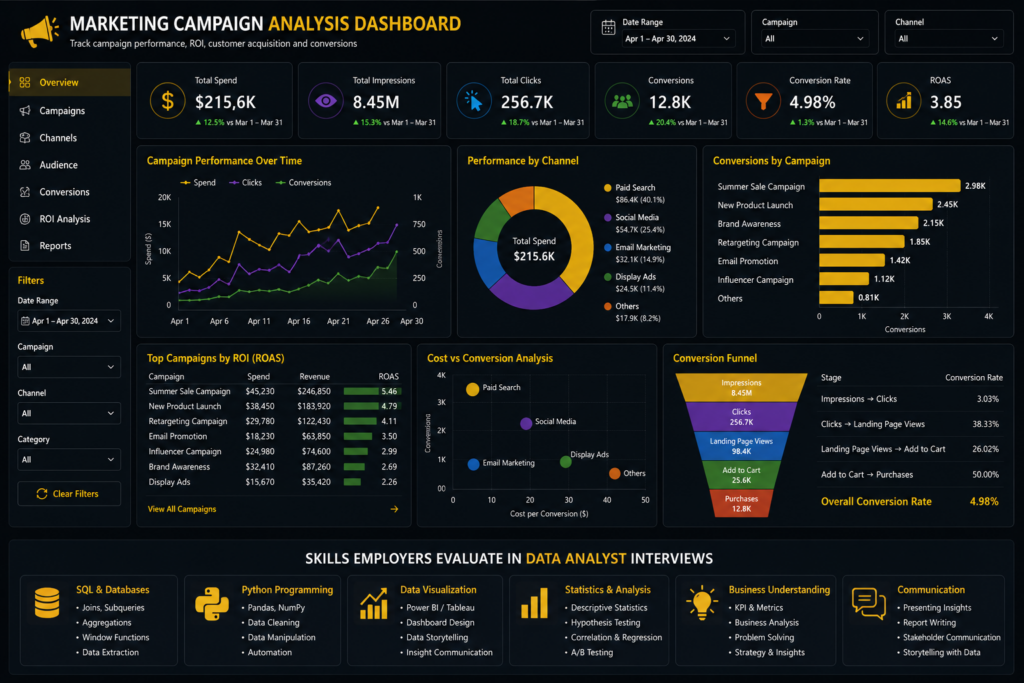
Marketing Campaign Analysis
SQL . Excel .Tableau
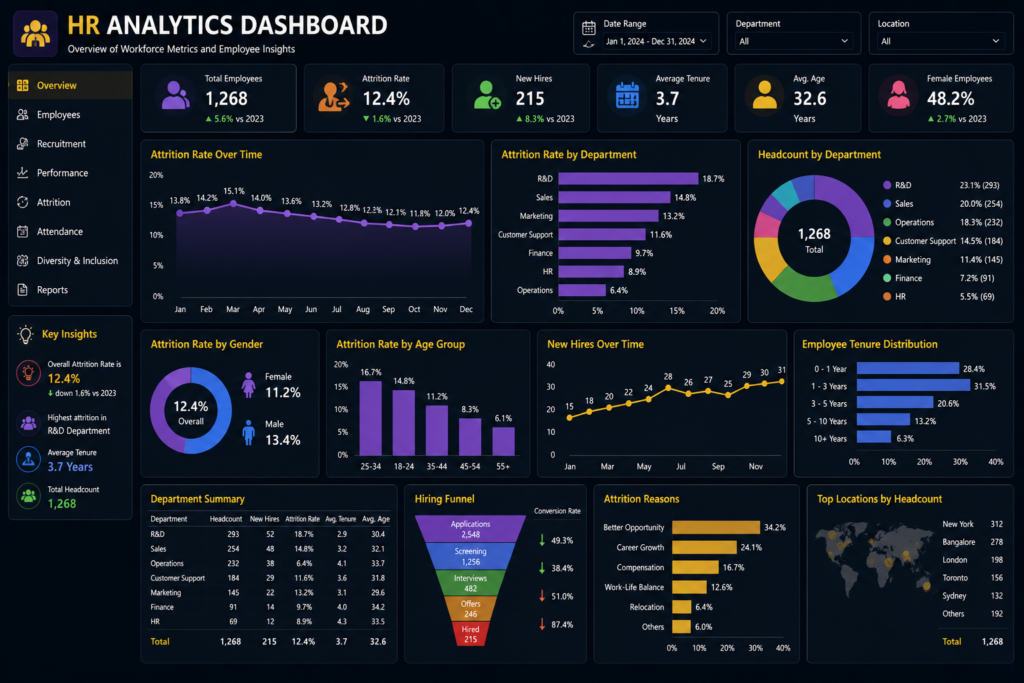
HR Analytics Dashboard Analysis
Power BI • Tableau • SQL • Excel
Data Analyst Interview Readiness Checklist
Evaluate your confidence across the core skills employers expect from Data Analyst candidates.
SQL & Databases
Can you write joins, aggregations, subqueries, and window functions?
Python Analysis
Can you clean, transform, and analyze datasets using Pandas and NumPy?
Data Visualization
Can you build dashboards and communicate insights clearly?
Statistics & Analytics
Can you interpret trends, distributions, correlations, and test hypotheses?
Business Metrics & KPIs
Can you measure performance and explain key business metrics?
Data Storytelling
Can you present insights clearly to technical and non-technical stakeholders?
How many areas can you confidently answer “Yes” to?
Needs Improvement
Building Foundations
Interview Ready
Ready to Strengthen Your Data Analyst Interview Skills?
Build confidence with real-world projects, scenario-based interview practice, dashboard preparation, resume guidance, and expert mentorship designed for aspiring Data Analysts.
FAQ
1. How do I prepare for a Data Analyst interview?
The best way to prepare is by strengthening your SQL, Python, data visualization, statistics, and business analysis skills. In addition to studying theory, practice solving real business scenarios, build portfolio projects, and explain your findings confidently, as employers often assess both technical and communication skills.
2. What technical skills are most important for Data Analyst interviews?
Most employers evaluate candidates on SQL, Python, Excel, Power BI or Tableau, statistics, data visualization, and analytical thinking. Strong communication skills and the ability to explain business insights are equally important.
3. Is Python mandatory for a Data Analyst interview?
Python is commonly required for many Data Analyst roles, especially when working with data cleaning, analysis, and automation. However, some positions focus more heavily on SQL, Excel, and business intelligence tools such as Power BI or Tableau.
4. What SQL topics are commonly asked in Data Analyst interviews?
Interviewers frequently ask about joins, aggregations, GROUP BY, HAVING, subqueries, Common Table Expressions (CTEs), window functions, ranking functions, and writing queries to solve business problems using real datasets.
5. How many portfolio projects should a Data Analyst have?
A portfolio with 3–6 well-documented projects is usually sufficient. Projects should demonstrate data cleaning, analysis, visualization, dashboard creation, and business recommendations rather than simply displaying charts.
6. Do employers ask scenario-based interview questions?
Yes. Many companies use business scenarios to evaluate how candidates approach problem-solving. Instead of asking only technical questions, interviewers often assess how you analyze data, communicate findings, and make data-driven recommendations.
7. What tools should I learn for a Data Analyst career?
Most Data Analyst positions require proficiency in SQL, Excel, Python, Power BI or Tableau, and basic statistics. Familiarity with business KPIs, dashboard design, and data storytelling can also improve your interview performance.
8. How can I improve my chances of getting hired as a Data Analyst?
Build practical portfolio projects, practice SQL and Python regularly, prepare for scenario-based interview questions, improve your communication skills, and learn how to present business insights clearly. Demonstrating real-world experience often has a greater impact than completing multiple certifications alone.